Description
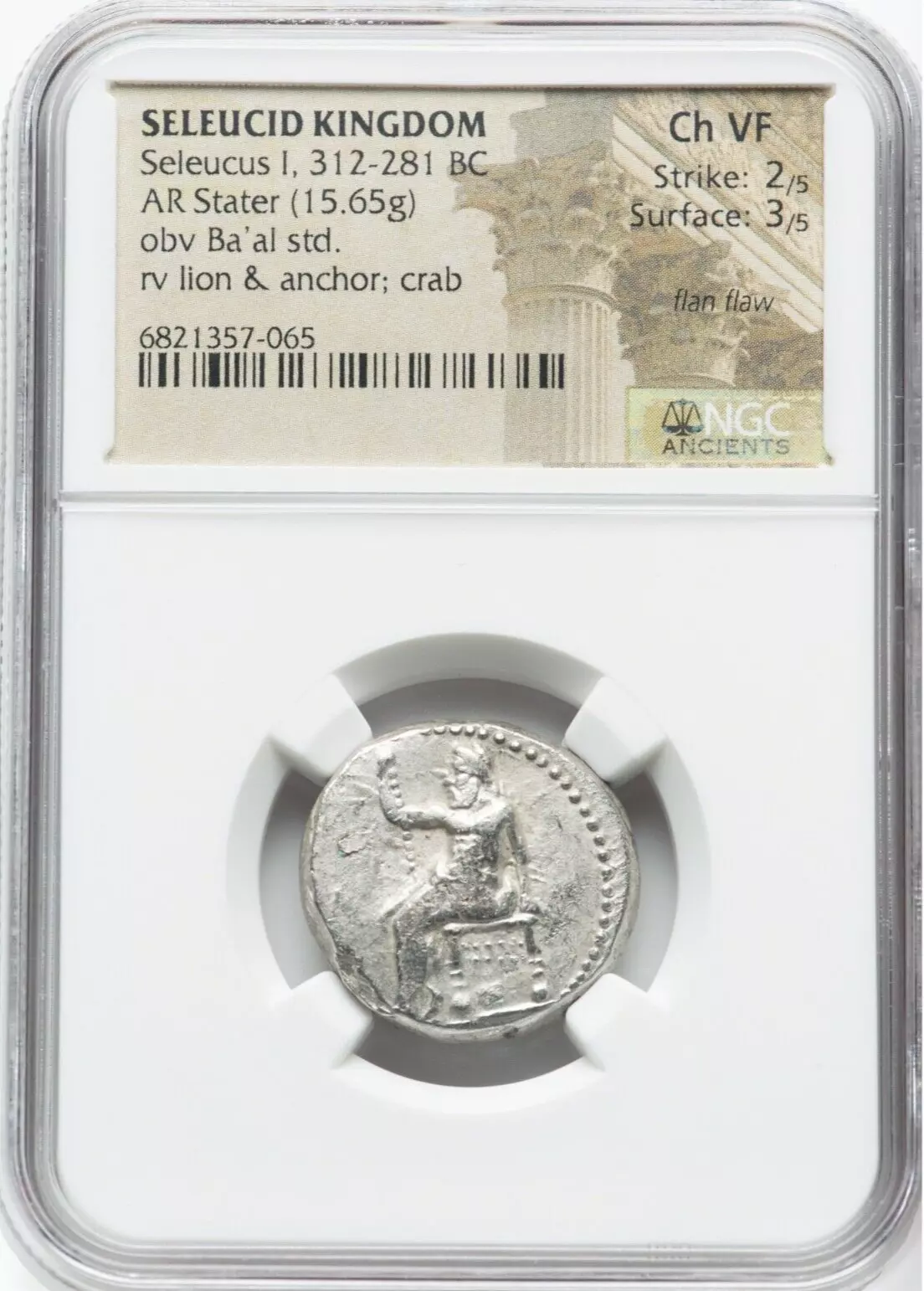
SELEUCID KINGDOM – Seleucus I Nicator, as Satrap (321-281 BC) AR Stater
Issuer: Seleucus I Nicator
Date: ca. 311-after 305 BC
Mint: Babylon II, the Native or Satrapal workshop
Specifications:
- Diameter: 22 mm
- Weight: 15.65 g
- Die Axis: 9h
Obverse:
- Design: Ba’al seated left on a backless throne, grounded scepter in right hand, left hand on throne.
Reverse:
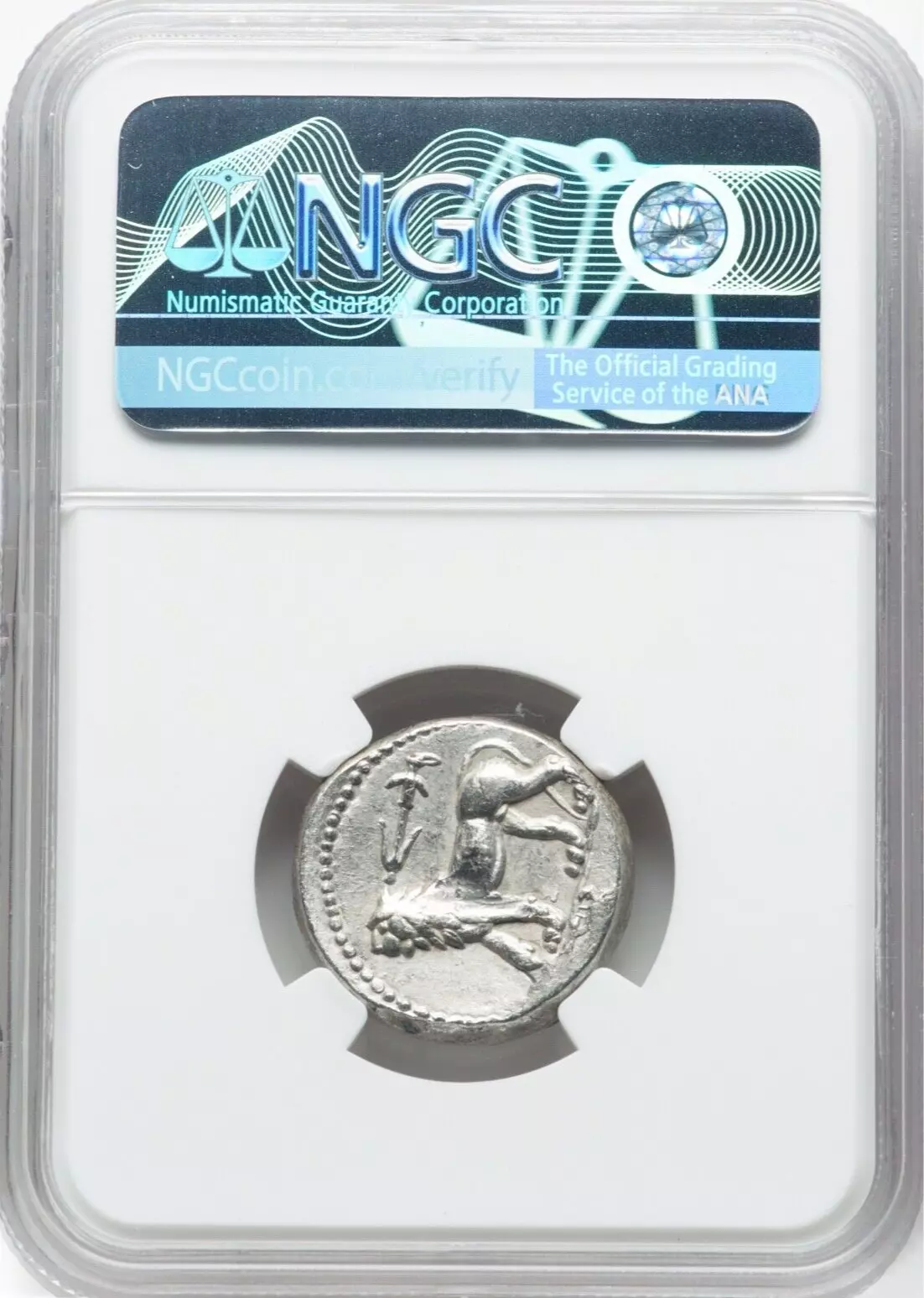
- Design: Lion advancing left; horizontal anchor above, crab seen from above in exergue.
References:
Condition:
- Grade: NGC Choice VF (Very Fine)
- Strike: 2/5
- Surface: 3/5
- Flaws: Flan flaw
Historical Context:
Seleucus I Nicator:
- Reign: Seleucus I Nicator was one of Alexander the Great’s generals and a founder of the Seleucid Empire. Initially serving as Satrap of Babylon after Alexander’s death, he later established a vast empire encompassing much of Alexander’s eastern territories.
- Portraiture: The coinage from this period often depicted deities and symbolic imagery rather than the rulers themselves, reflecting the cultural and religious syncretism of the era.
Symbolism and Iconography:
- Ba’al: The obverse features Ba’al, a prominent deity in the region, symbolizing Seleucus’ respect for local traditions and religious practices.
- Lion and Anchor: The reverse shows a lion, symbolizing strength and power, and an anchor, indicating stability and naval prowess. The crab in the exergue might symbolize the influence of Hellenistic culture, blending Greek and local elements.
Collectibility:
- Historical Significance: This coin is a significant artifact from the early Hellenistic period, illustrating the political and cultural landscape of the post-Alexander era.
- Condition: Despite the flan flaw, this stater is a valuable addition to any collection, offering insights into the early Seleucid Kingdom and its iconography.
For further information, please call 212 3191077.

Reviews
There are no reviews yet.